In March 2024, I traveled to Hanoi to celebrate completing my PhD. A friend who had worked as a postdoctoral researcher in my former laboratory invited me to his hometown. A few days into the trip, on a drizzly afternoon, we visited a geological museum that looked wonderfully old-fashioned even in the photographs I had seen online.
A PhD Celebration, Hanoi-Style
The trip began as a celebration rather than a museum expedition. My friend knew Hanoi as home, not just as a destination on a map. The city felt unhurried to me, with an easygoing generosity that was immediately inviting. The food also required very little adjustment: familiar, almost soy-sauce-like savory notes appeared alongside tropical ingredients. Within a few days, I felt quite at ease at the table.
That was when we decided to spend an afternoon among rocks and minerals. Reviews and photographs had suggested a charmingly retro museum, so we went together despite the light rain.
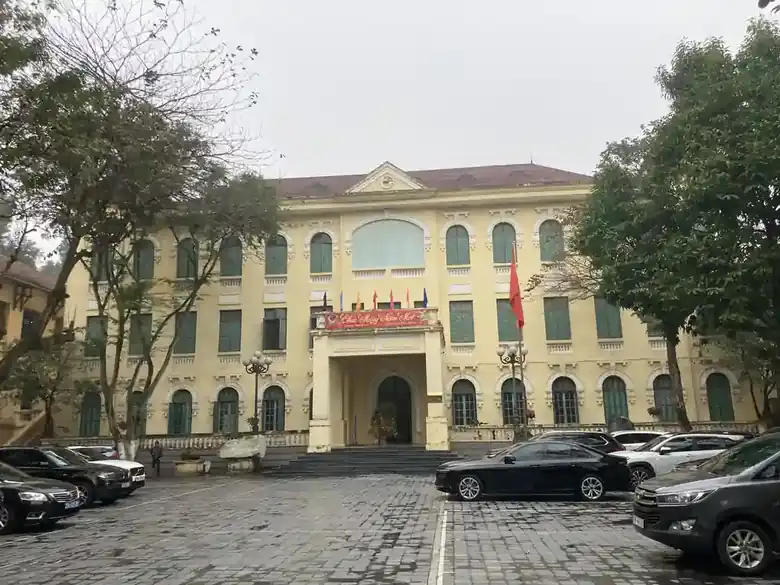
Rain at the Entrance
At the entrance, the air carried the smell of rain-soaked earth. We stepped inside, wrote our names in the visitor register, and received a short introduction. I remember that small ritual almost as clearly as the exhibits: signing a book and entering a quieter world while the damp streets of Hanoi remained outside.
The first floor felt spacious. Rocks, geological strata, and regional distributions were presented in an impressively systematic manner. There was a sense that somebody had thought carefully about how each specimen belonged to a larger story of the land.
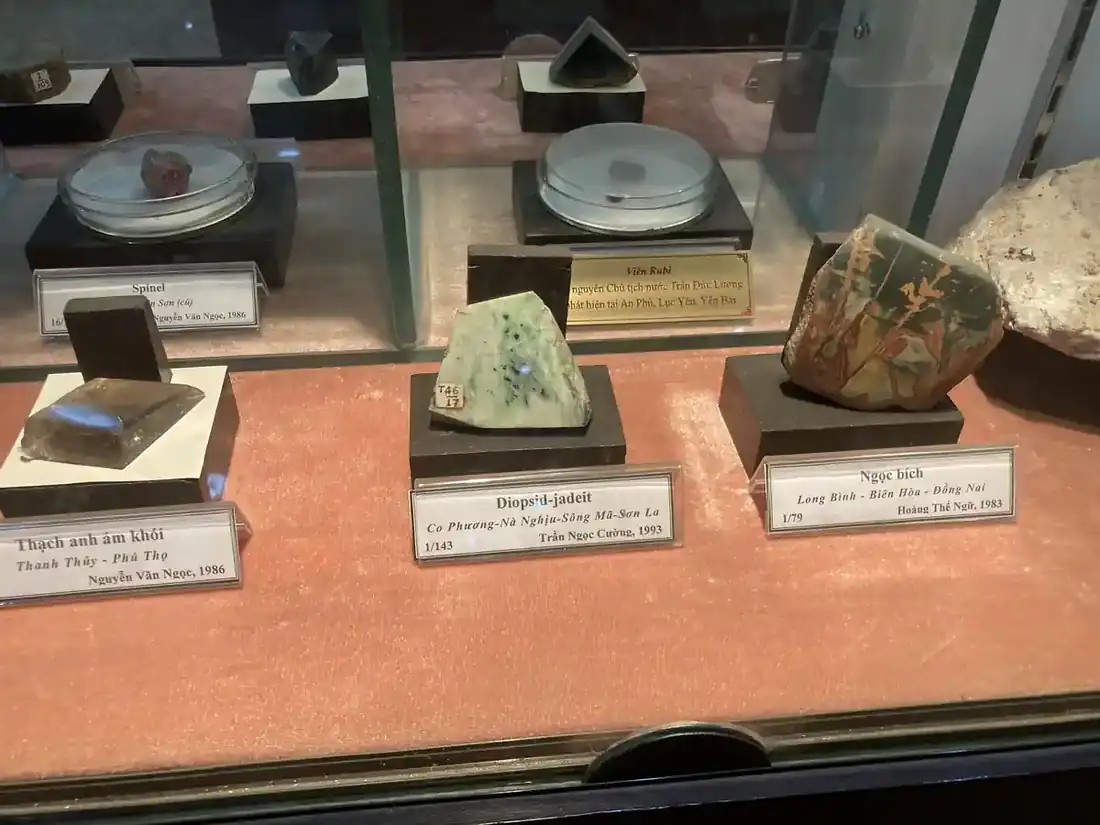
Cool Green Stone in a Tropical City
One of my favorite moments was finding a beautifully green specimen. It reminded me of the jade associated with Itoigawa in Japan, yet its surface looked remarkably clean and seemed almost free of the cracks I had expected. The coolness of the stone was striking: for a moment, that sensation pushed the tropical warmth of Hanoi out of my mind.
I am describing the impression it made on me rather than presenting a laboratory identification. Even so, it was a wonderful reminder of how much pleasure there is in looking closely at the surface, color, and texture of a mineral.
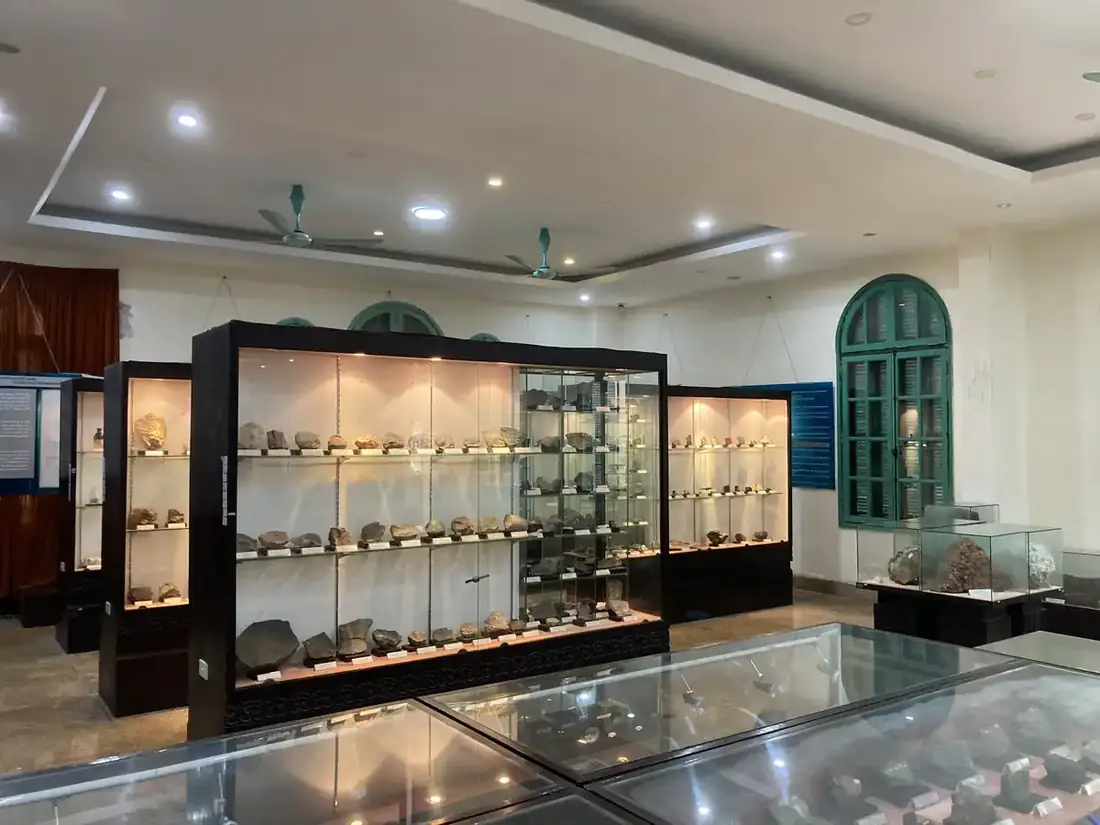
Cabinets from Another Century
As we moved through the upper floors, there were minerals, fossils, and displays related to geological fieldwork. But the room itself was almost as memorable as anything in the cases.
The heavy wooden cabinets, dark with varnish, gave the galleries the atmosphere of a nineteenth-century cabinet of curiosities. There was something almost Biedermeier-like about the polished, substantial furniture. It felt less like passing through a modern exhibition and more like visiting an old scholar’s private collection.
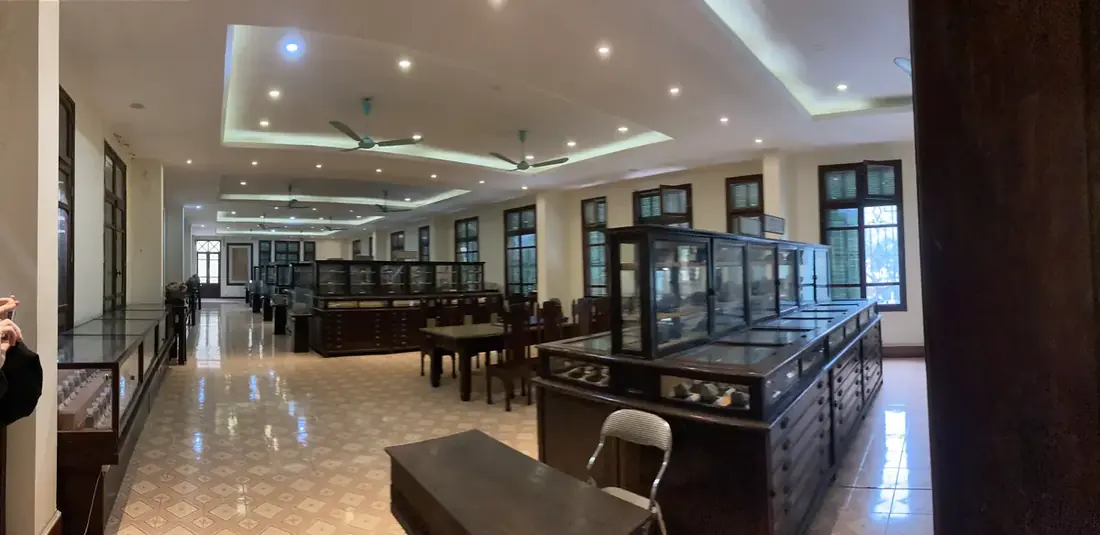
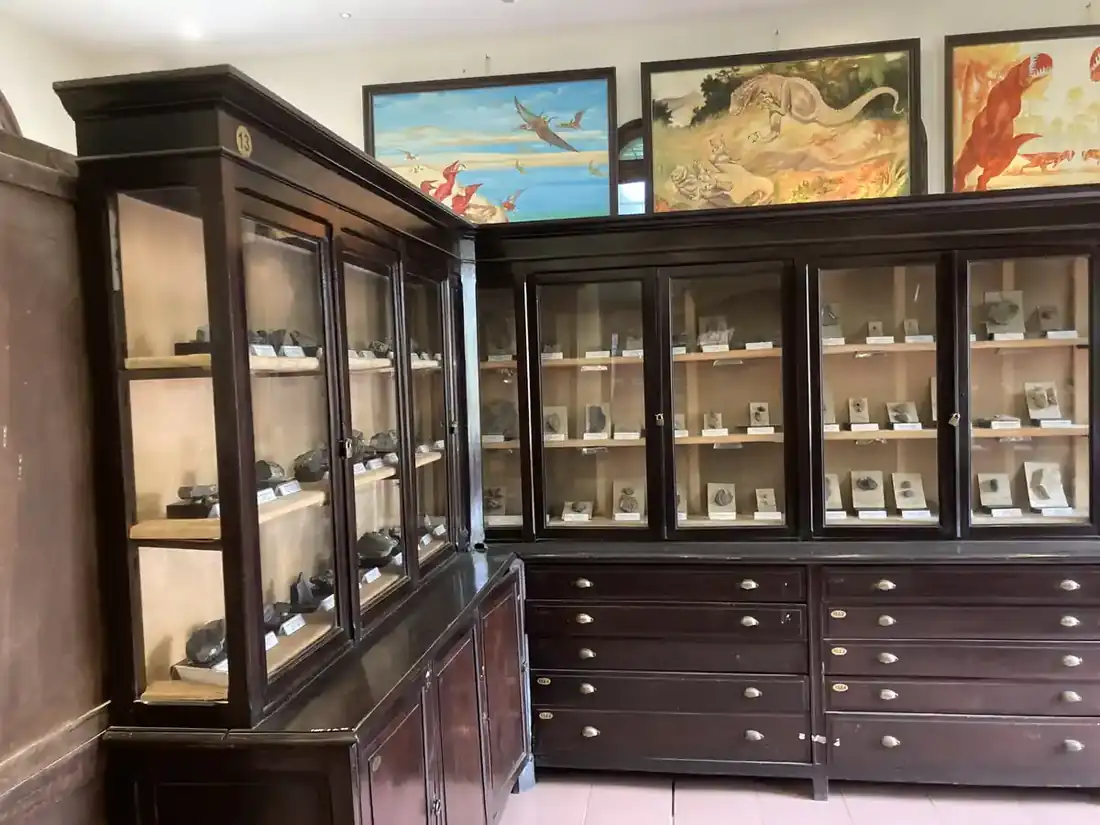
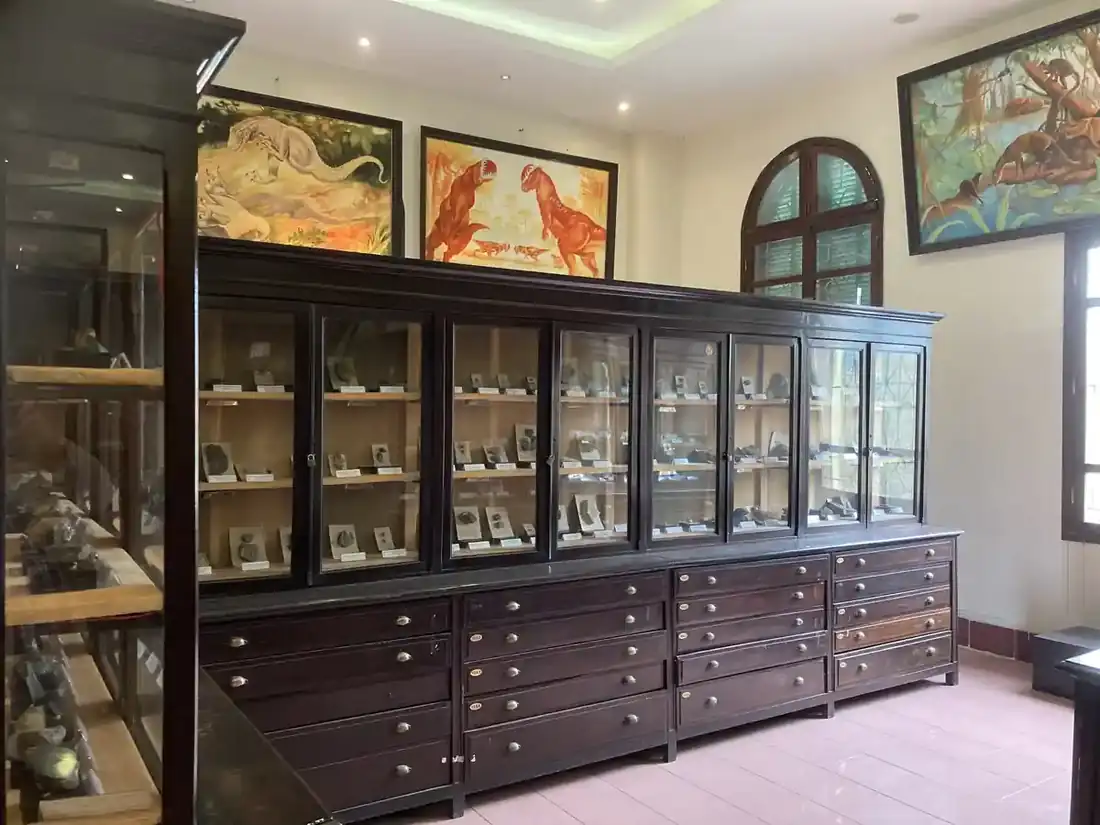
I could have spent a long time simply examining the cases. The number of samples, and the care with which they were arranged, made it easy to lose track of time. With its mountains and varied mineral resources, Vietnam reminded me in some ways of Japan. There was always another specimen worth a second look.
Tourmaline, Quartz, and the Joy of Looking Closely
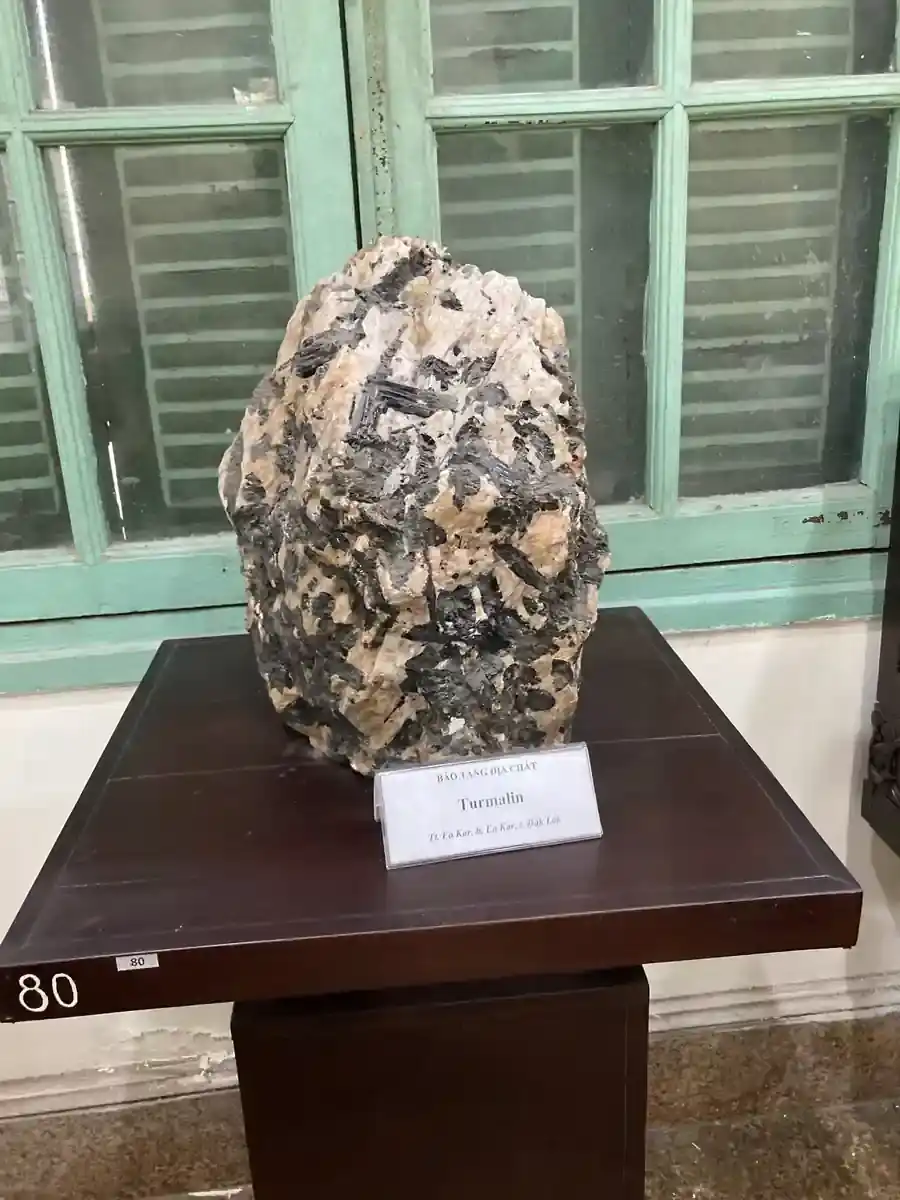
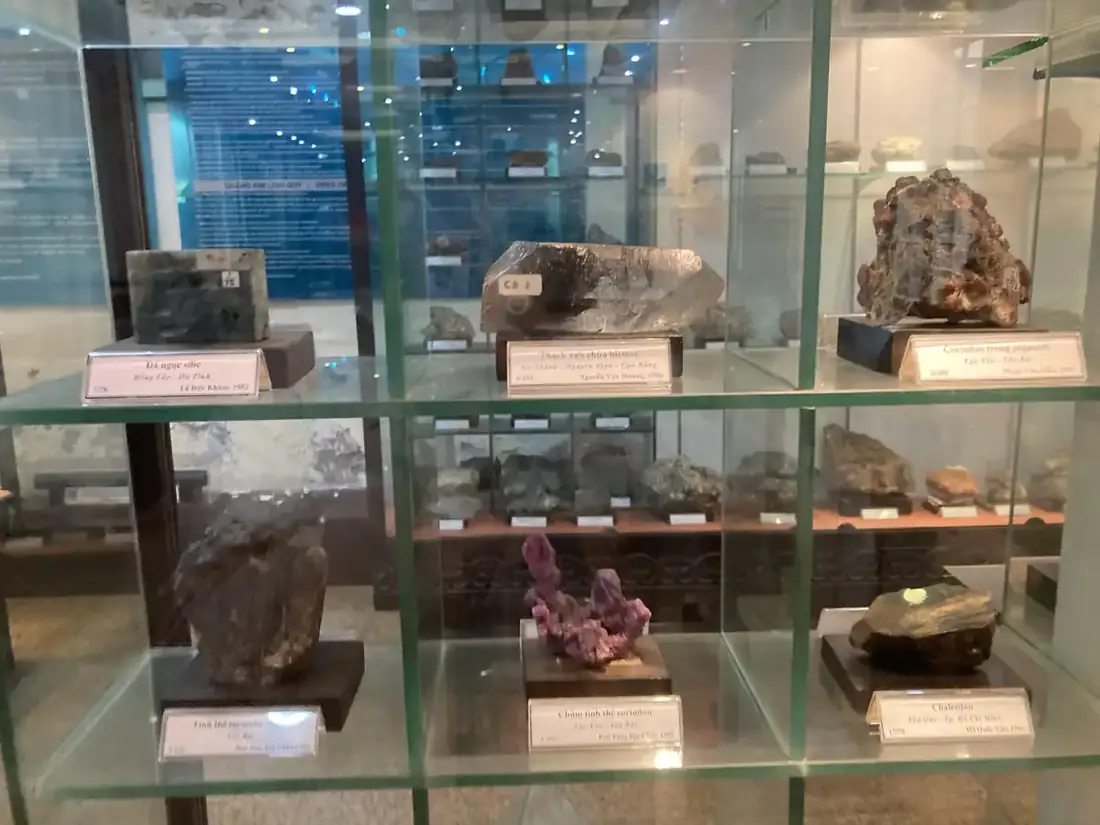
A large tourmaline specimen, with dark elongated crystals scattered through a lighter matrix, stood out immediately. It was dramatic, rugged, and strangely architectural.
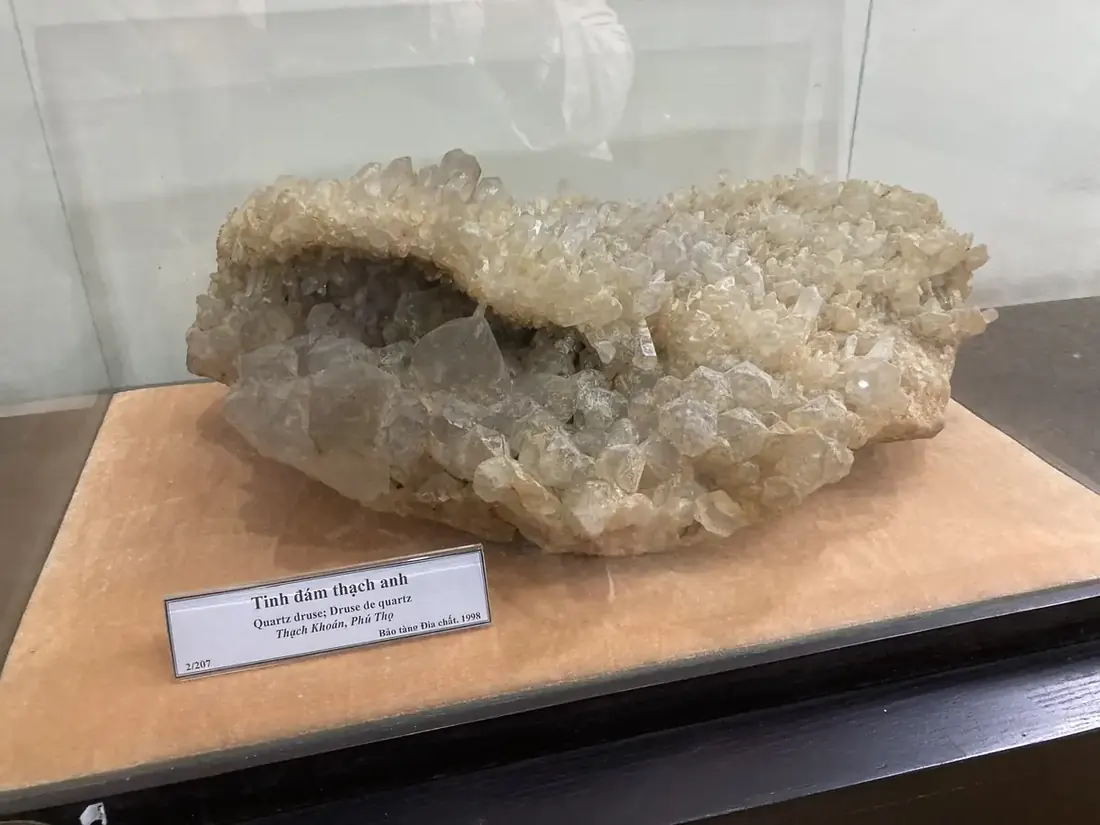
Then there was the enormous quartz cluster. It was magnificent—the kind of object that makes you stop mid-conversation. I would have been happy just to stand there and examine the overlapping crystal faces for a while.
Even smaller specimens rewarded attention. Behind the glass, different habits, colors, and surface textures formed a quiet catalogue of geological possibilities. The pleasure of this kind of museum is that nothing needs to move or flash to hold your interest.
One Small Concern
I also noticed an asbestos-related display whose storage arrangement differed from those I was used to seeing in Japan. It made me a little uneasy. That was simply part of my impression of the visit, alongside the many things I admired.
How Long Would I Spend Here?
Someone looking through the museum at an ordinary pace could probably enjoy it in about an hour. A mineral enthusiast, however, could easily spend two hours or more here. I would genuinely like to return alone one day, without hurrying, and work my way through the cases one by one.
Plan a Visit: Geological Museum of Vietnam
Visitor guides generally list weekday opening hours, but their precise time ranges differ. Check the latest schedule before traveling, particularly for weekends and midday closures. The museum is in central Hanoi near the Opera House area.
One More Thing I Want to Take Home
The visit was a small part of a trip that began as a celebration of my PhD. Yet it remains one of my clearest memories of Hanoi: rain on the way in, carefully arranged specimens, cool green stone, and rows of heavy wooden cabinets.
I'd recommend visiting slowly, preferably with enough time to look at the details rather than just walking past the displays.
Someday, I would love to own a collection on this scale. Actually, not just the collection—the whole museum. I really do mean it.
More Science, Museums, and Old Books
Explore more first-person science travel stories on BCC Magazine. A companion article will explore inorganic chemistry for life-science readers through old Japanese mineralogy books.
Useful Visitor Sources
- VinWonders — Geological Museum of Vietnam visitor guide
- MIA.vn — Hanoi Geological Museum visitor information
Visited and photographed in March 2024. This travel story reflects the visitor’s own memories and impressions; practical information may have changed since the visit.