BCC Magazine · Museum Travel #01 · Kyoto, Japan
Looking for unusual museums in Kyoto beyond temples and shrines? The Kyoto Municipal Museum of School History offers something different: historic Japanese classrooms, schoolbooks, educational artifacts and a former elementary-school building that tells the story of modern education in Japan. I visited the museum and photographed its historic spaces and scientific instruments. Here is what I found, who I would recommend it to, and what international visitors should know before going.
Kyoto Municipal Museum of School History: Visitor Information
京都市学校歴史博物館
Planning note (checked October 2026): Admission to special exhibitions may cost more (for example, some exhibitions list ¥400 for adults). Hours, closures and displays can change. Confirm current details on the official visitor information page before visiting. The museum has no visitor car park.
Who Should Visit? Families, Adults or Science Enthusiasts?
Not every museum suits every traveler. These recommendations reflect my visit, not an official age rating or a standardized external score.
Inside the Museum: Four Highlights in Original Photos
1. A school gate that opens onto another era
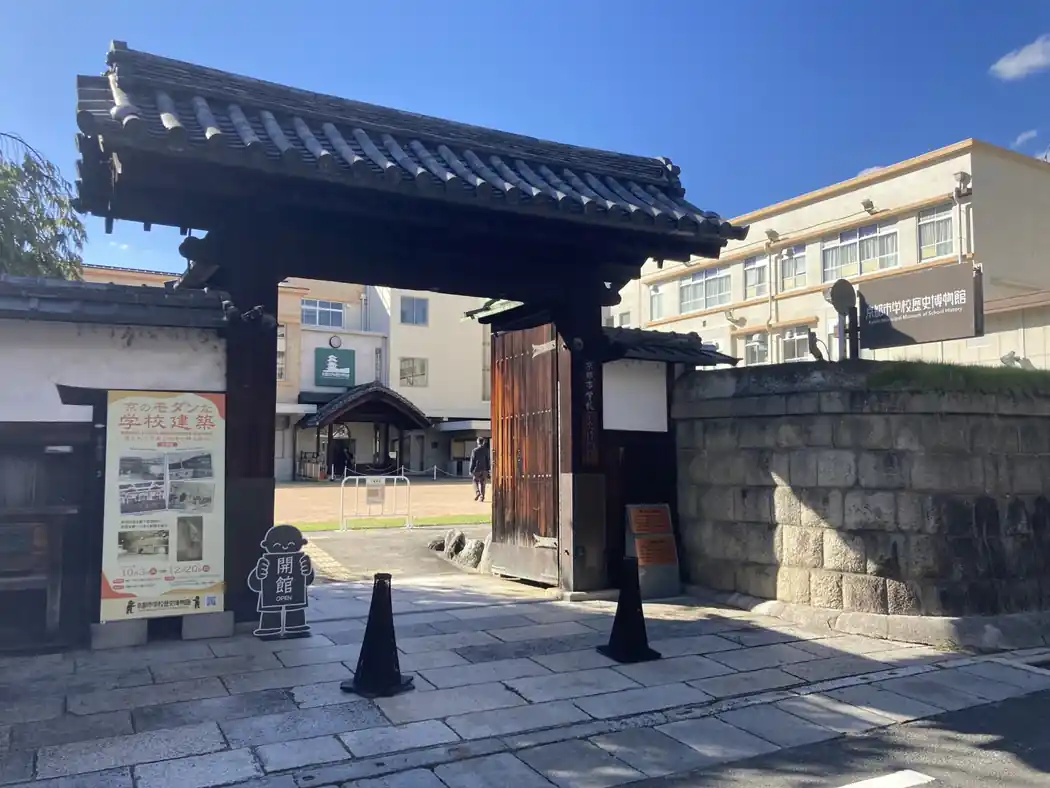
Kyoto is often photographed for its shrines and temples, but this entrance introduces another part of the city's history: the school. The museum occupies the site of the former Kaichi Elementary School, and the preserved architecture is itself part of the experience. The museum association identifies its main gate as a Korai-mon-style gate built in 1901.
2. A corridor that brought back elementary-school memories
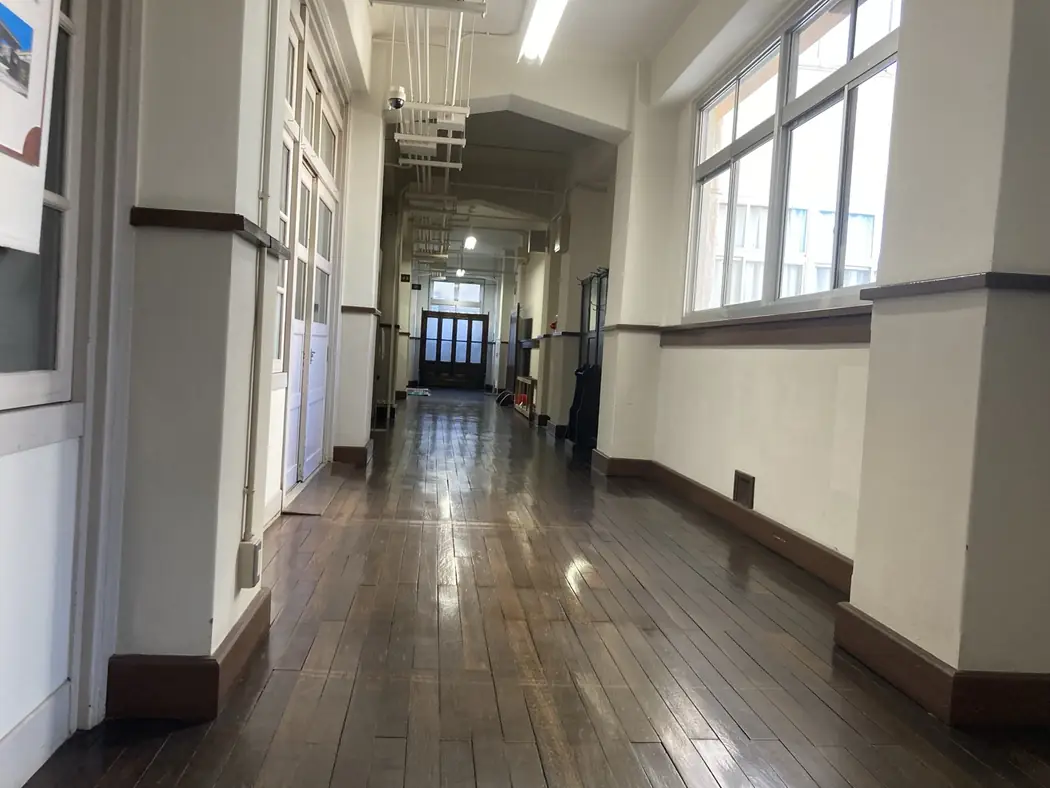
The polished wooden floor, the row of classroom doors and the daylight filtering through the windows felt deeply familiar. The corridor recalled the marked centerlines I remember from public elementary school, and the teachers who repeatedly told us to keep to the left. I cannot claim every school in Japan used the same rules, but the scene took me straight back to childhood.
3. The old auditorium
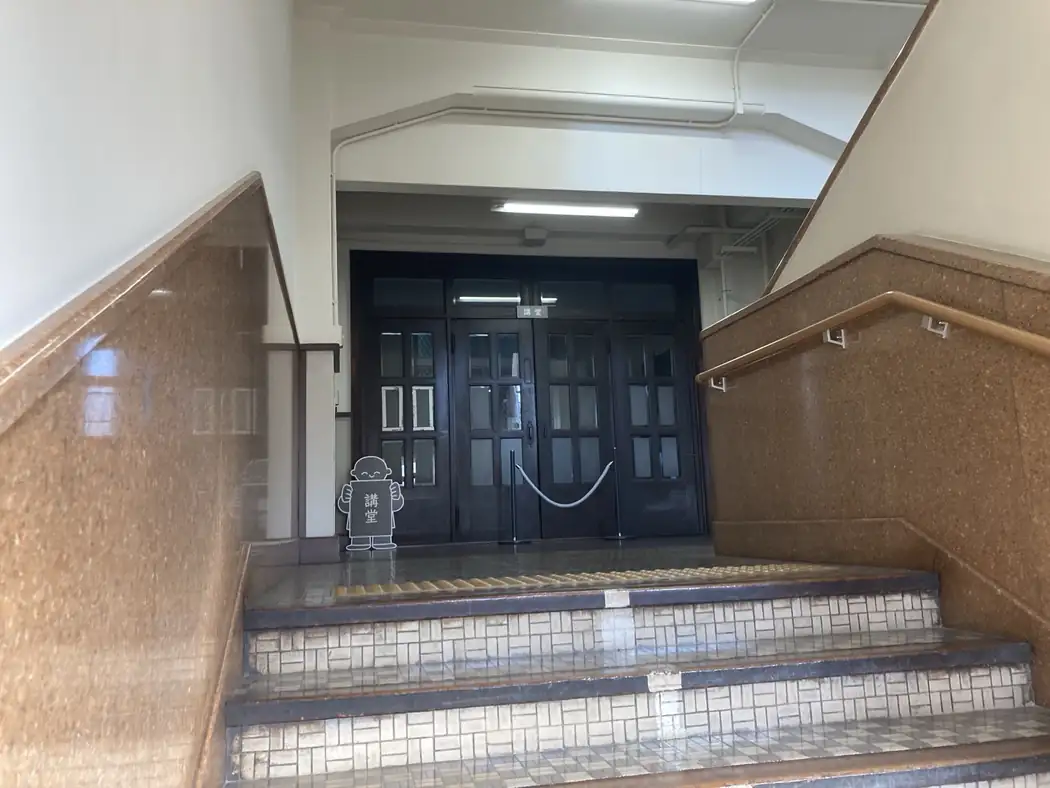
The old doors and stairway made an impression quite different from the polished appearance of a newly built museum. Walking through an actual former school, rather than only viewing objects behind glass, helps visitors imagine the routine of generations of pupils and teachers.
4. Historic scientific instruments and modern science education
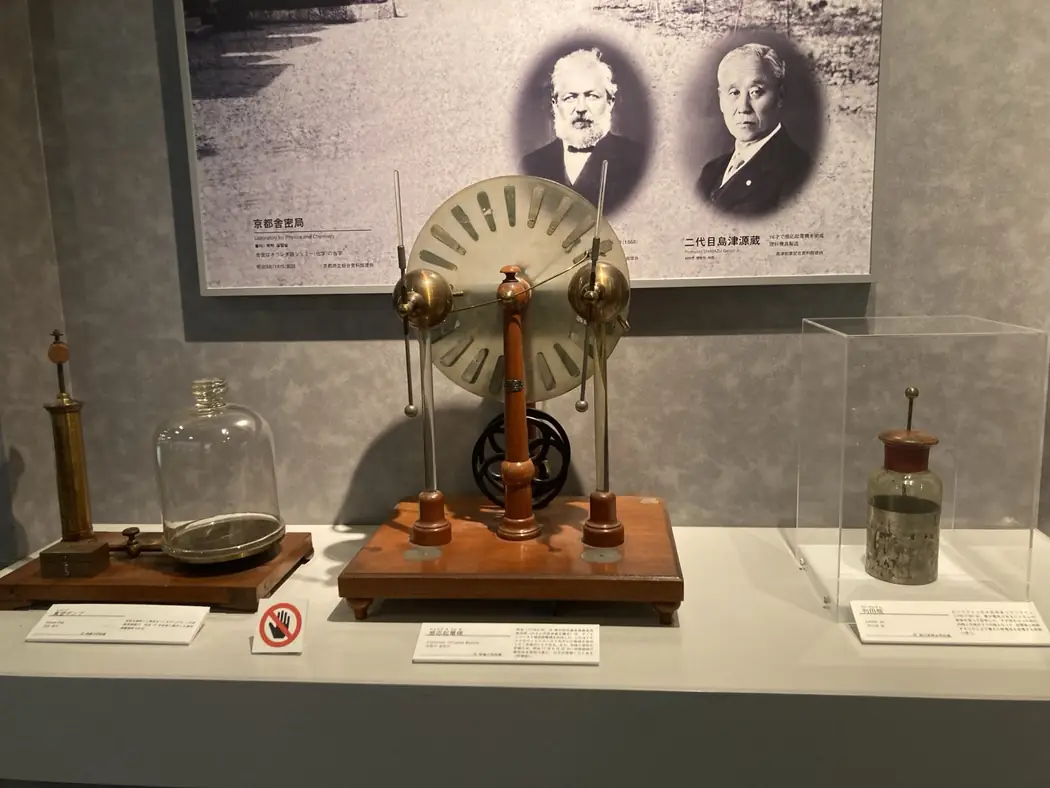
The display connects modern school education to Kyoto's history of scientific teaching and instrument-making. The panel behind the apparatus mentions Kyoto Seimi-kyoku (an early institution associated with the teaching of chemistry) and second-generation Genzo Shimadzu, whose work is linked to Japan's scientific-instrument industry.
Identification note: the central device appears to be an electrostatic demonstration apparatus. This article does not claim a confirmed model or operating mechanism from the photograph alone. Consult the museum label for precise object attribution.
My Impressions: The Smell of Chalk, Calligraphy Ink and School Memories
For Japanese visitors born around the transition from the Shōwa era to the Heisei era, the recreated classroom displays can be surprisingly emotional. I was reminded of the smell of chalk dust and calligraphy ink from my own school days. Those are memories the exhibits brought back, not a claim that the museum itself was filled with these smells.
What impressed me most, however, was the longer history presented here. Kyoto was an early pioneer of public elementary education in modern Japan. The exhibition takes visitors through the Meiji era and the arrival of Western ideas, through the tumultuous changes after World War II, and toward the present day.
The educational artifacts tell more than a story of school administration. Postwar textbooks with sections blacked out, traditional randoseru school backpacks, classroom organs and other familiar objects show how Japan's society and everyday life changed alongside its schools. Different generations will probably find different things to remember.
For a visitor from overseas, these displays offer a way to encounter Japanese history outside the usual itinerary of temples and castles. They show how an ordinary child might have experienced the country through school, rather than through the lives of famous rulers.
One disappointment: I love old science classrooms, so I had particularly hoped to see a fully recreated historical science laboratory. I did not find one during my visit. What I did see was a display of historical scientific instruments and materials related to science and technology education. Interesting, yes—but not quite the atmospheric old science room I had imagined.
Overall, I enjoyed the visit very much. The museum has a way of making a national story feel personal: the story of modern education told through schoolbooks, instruments, familiar hallways and the memories they leave behind.
Why Kyoto Matters in the History of Education in Japan
In 1869, local communities in Kyoto established 64 bangumi elementary schools, several years before the Japanese government's nationwide education system was issued in 1872. The museum presents this development as a key early step in Japan's modern public education and explains the role of local residents in funding and establishing the schools.
This history gives the museum a distinctive focus: education as part of Kyoto's response to the upheavals of the Meiji Restoration. Rather than concentrating only on historical elites, it highlights local communities, teachers, pupils and everyday school culture. The museum opened in 1998 in the former Kaichi school building.
The historical laboratory instruments also hint at another transformation: the growing role of experimental science in teaching. For a visitor interested in chemistry or science history, the displays invite questions about how electricity, measurement and practical experiments became part of education.
Where Is the Museum? Google Maps and Directions
The museum is in central Kyoto's Shimogyo Ward, within walking distance of the Shijo–Kawaramachi area. It can fit into a city itinerary without requiring a long trip outside central Kyoto.
📍 Open museum in Google MapsGet directions| Starting point | Walk to the museum |
|---|---|
| Hankyu Kyoto-kawaramachi Station | Approximately 10 minutes |
| Kyoto Municipal Subway Shijo Station | Approximately 12 minutes |
| Keihan Gion-shijo Station | Approximately 15 minutes |
| Kyoto city bus: Kawaramachi-Matsubara stop | Approximately 5 minutes |
Walk times are based on the museum's official visitor guide. Actual travel time depends on your route and mobility.
Practical Tips for International Visitors
Language: During my visit, the exhibitions were primarily in Japanese. The museum does provide a short official English-language introduction online, but visitors should not assume that every in-gallery text has an English translation. Translation tools may be helpful, subject to the museum's photography rules.
Expectations: This is a history-oriented museum with objects, documentation and school architecture. It is not a hands-on science center with large interactive experiment areas. If your children primarily want interactive science activities, a dedicated science museum may be a better match.
Photography: The photographs in this article were taken during my visit, but rules can vary by room and exhibition. Follow on-site signs and staff instructions; do not assume photography is allowed everywhere.
Accessibility: A Kyoto prefectural tourism listing reports wheelchair access with some steep ramps and assistance available from staff. Contact the museum for current requirements if step-free access matters to your visit.
Museum Travel Review: What Makes This Place Worth Visiting?
| Review category | My assessment |
|---|---|
| Historical and educational value | Standout strength. A personal and local account of how schooling changed in Japan. |
| Historic atmosphere | Standout strength. The former school environment adds to the experience. |
| Science-history interest | Selective appeal. Interesting old scientific apparatus, but no full historical science classroom on my visit. |
| Hands-on activities | Not the main attraction. Choose a dedicated science center if hands-on experiments are your priority. |
| English-language accessibility | Limited. Primarily Japanese-language exhibitions. |
| Value for money | Good for interested visitors. The standard general admission is modest, though special exhibitions can change the price. |
Final verdict: If you want to discover Japan through everyday objects and local history, I recommend this small Kyoto museum—especially if you are a history-loving adult, an educator or a traveler curious about how Japanese children were taught. It is less suitable if you primarily want English-led interpretation or a hands-on family science attraction.
Frequently Asked Questions
Is the Kyoto Municipal Museum of School History worth visiting?
For visitors interested in Japanese history, education, historic school buildings or nostalgic classroom displays, yes. Those looking only for major Kyoto landmarks or interactive science exhibits may prefer a different attraction.
Is it a good Kyoto museum for kids?
It can suit curious school-age children, particularly those interested in how Japanese classrooms used to look. It is primarily an exhibition and history museum rather than a play-based children's center.
Are the museum exhibits in English?
Based on my October 2026 visit, the exhibition explanations were primarily in Japanese. The museum has a short official English introduction online. Ask staff about any current multilingual materials.
How much does admission cost?
Regular admission is ¥300 for adults and ¥150 for elementary, junior-high and high-school students; preschool children enter free. Adult admission can be higher during special exhibitions. Check the museum's official visitor guide for current prices.
Is the museum near central Kyoto?
Yes. It is roughly a 10-minute walk from Hankyu Kyoto-kawaramachi Station and within walking distance of Gion-shijo and Shijo stations.
Does the museum have an old Japanese science laboratory?
I saw historical scientific instruments and science-education material, but I did not find a recreated historical science classroom during my visit. Displays may change over time.
More Museum Travel and Science Stories
Explore more science, history and educational content on BCC Magazine. Our Museum Travel series visits museums and historical sites through the perspective of a scientist, with original photographs and practical notes for visitors.
Sources and Visit Notes
- Kyoto Municipal Museum of School History — Official Visitor Guide (hours, admission, location, transport).
- Official English Introduction (museum history, 64 Kyoto schools founded in 1869).
- Kyoto Museums Association — Museum Profile (museum building, early education, gate).
- Kyoto Prefecture Tourism Federation — Museum Listing (transport, admissions during exhibitions, access notes).
Editorial transparency: The visit occurred in October 2026. All four photographs are original visitor-supplied images, resized for web delivery. Recommendations, childhood recollections and impressions are personal; official historic and visitor information is linked above. The museum is not represented as sponsoring or endorsing this article. Please check the official site for changes since publication.