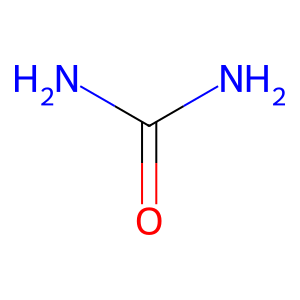
Can you trace the urea cycle from ammonia to urea? This free interactive quiz tests the five enzyme-catalyzed reactions of the ornithine cycle by asking you to identify products from chemical structures. It is designed for biochemistry, nursing, medical, and pharmacy students.
What Is the Urea Cycle?
The urea cycle removes excess nitrogen by converting ammonia and nitrogen donated by aspartate into urea, primarily in the liver. The first two reactions take place in mitochondria; the remaining three occur in the cytosol. The complete pathway requires three ATP molecules, but consumes four high-energy phosphate bonds because the argininosuccinate synthetase reaction converts ATP to AMP and pyrophosphate.
Interactive Urea Cycle Quiz: All 5 Steps
Follow the same arrow → three-structure-choice → arrow layout as our TCA Cycle Quiz. Select the product at each step. Steps 4 and 5 include two products in one answer card. The returning arrow shows how ornithine is recycled; urea leaves the cycle.
JavaScript is required to display this interactive chemical structure quiz.
Five Enzymes of the Urea Cycle
| Step | Enzyme | Key reaction | Location |
|---|---|---|---|
| 1 | Carbamoyl phosphate synthetase I (CPS1) | Ammonia + bicarbonate → carbamoyl phosphate; 2 ATP consumed | Mitochondria |
| 2 | Ornithine transcarbamylase (OTC) | Ornithine + carbamoyl phosphate → citrulline | Mitochondria |
| 3 | Argininosuccinate synthetase (ASS1) | Citrulline + aspartate → argininosuccinate; ATP → AMP + PPi | Cytosol |
| 4 | Argininosuccinate lyase (ASL) | Argininosuccinate → arginine + fumarate | Cytosol |
| 5 | Arginase 1 (ARG1) | Arginine + water → ornithine + urea | Cytosol |
How to Identify the Chemical Structures
Carbamoyl phosphate is a phosphorylated carbamate, while ornithine is a non-proteinogenic amino acid. Addition of a carbamoyl group forms citrulline. Argininosuccinate combines carbon skeletons from citrulline and aspartate, whereas arginine contains a guanidino group. The last reaction yields small urea and regenerates ornithine. Fumarate also participates in the TCA cycle.
Metabolites may have different protonation states at physiological pH. For a consistent visual quiz, use the same chemical drawing conventions across all provided structures, and use the L forms where stereochemistry matters.
Frequently Asked Questions
How many steps are in the urea cycle?
The canonical pathway has five enzyme-catalyzed reactions: CPS1, OTC, ASS1, ASL, and ARG1.
Where does the urea cycle occur?
It occurs primarily in the liver, with two reactions in the mitochondrial matrix and three in the cytosol.
Where do the two nitrogen atoms in urea come from?
One nitrogen comes from free ammonia, incorporated through carbamoyl phosphate. The other comes from aspartate.
Does the urea cycle use three or four ATP?
Three ATP molecules are consumed, corresponding to four high-energy phosphate bonds.
Explore Related Metabolism Quizzes
Study the TCA Cycle Quiz, where fumarate is also an intermediate, or try the Glycolysis Quiz and Pentose Phosphate Pathway Quiz.
References
Yudkoff M. Urea Cycle. In: Basic Neurochemistry: Molecular, Cellular and Medical Aspects. 6th ed. NCBI Bookshelf. Read online.
Urea Cycle Disorders Overview. GeneReviews®, NCBI Bookshelf. Read online.